Data Centers in Malaysia: A Local Crisis Behind the Digital Boom
The narrative that Malaysia has already “won” the regional data center race—particularly in Johor—is a premature celebration. While the federal government eyes massive investment figures, local communities are beginning to realize that these monolithic structures often take more than they give.
The reality on the ground is a stark contrast to the high-tech promises. Beyond a handful of security and maintenance roles, commissioned data centers offer negligible long-term employment for locals. Instead, residents are left with “no-go” industrial zones, persistent noise from massive cooling units, and a looming threat to their basic resources. With Johor already facing water stress, the arrival of AI-driven hyperscale facilities—which consume significantly more power and water than traditional centers—threatens to drive up utility costs for every household in the vicinity.
The ZDATA Controversy: A Case Study in Neglect
The friction is most visible in Gelang Patah, where the construction of China-based ZDATA Technologies’ hyperscale facility has triggered unprecedented public protests. Unlike most data centers situated in isolated industrial parks, the ZDATA site sits less than a kilometer from residential neighborhoods like Taman Nusantara Prima and Taman Nusa Bayu.
The Local Reality vs. Corporate Statements:
The Environmental Cost: Community groups on social media have highlighted the loss of mature greenery, often dismissed on corporate balance sheets as “site clearing expenses” rather than the destruction of local carbon sinks not to mention the opportunity for illegal logging profits for someone.
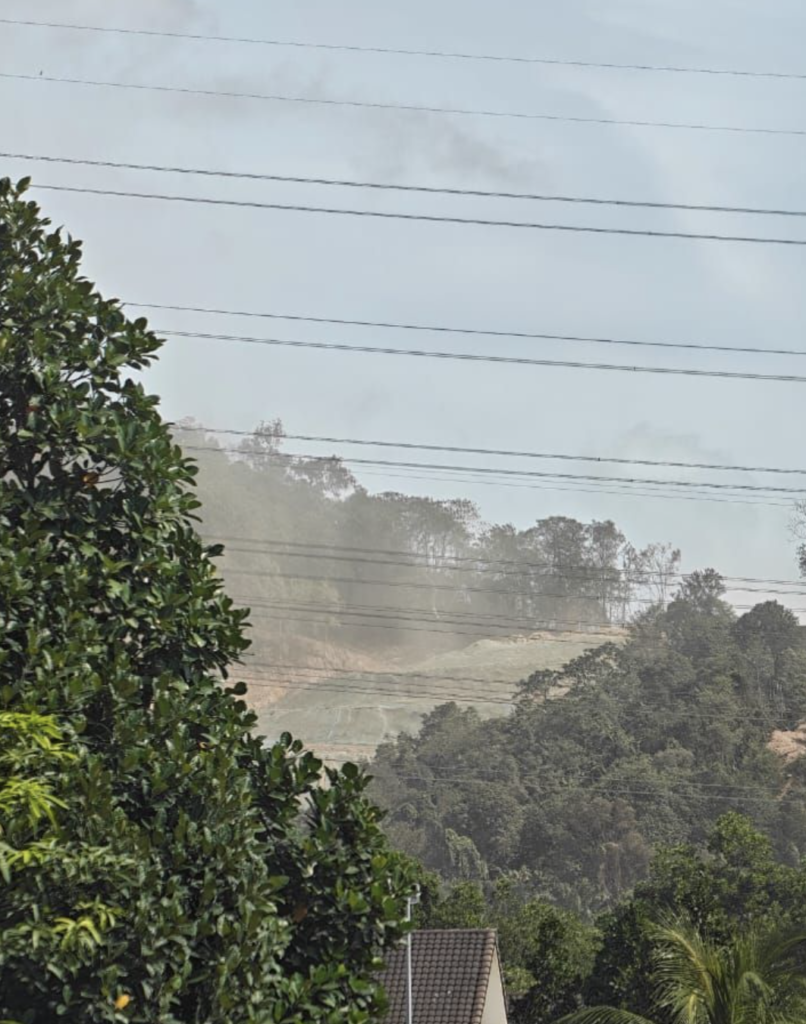
The Protest: In February 2026, more than 50 demonstrators (representing nearly 1,000 affected residents) gathered to demand accountability for daily dust pollution and the strain on potable water.
The Corporate Defense: ZDATA has officially claimed that the pollution stems from adjacent plots, yet local authorities had already issued a two-week stop-work order in late 2025 due to substandard construction practices and violations of permitted working hours.
It is worth noting that the Johor government recently moved to stop approving Tier 1 and Tier 2 data centers specifically because they consume 200 times more water than newer, more efficient designs.
ZDATA Technologies Responds To Protests Of AI Datacentre In Johor
https://www.lowyat.net/2026/382868/zdata-technologies-responds-to-protests-of-ai-datacentre-in-johor
“ZDATA, the China-based datacentre firm, officially released a statement, addressing the recent protests and claims of pollution generated by the construction of its hyperscale datacentre in the state of Johor.
As a quick primer, more than 50 demonstrators protested outside the site for the planned datacentre, located in the Gelang Patah district. The facility is reportedly located less than a kilometre away from residential homes”
ZDATA claims that reports about it, and by extension, the construction site, are the source of dust pollution and potable water shortages was inaccurate, and that any such scenario was unlikely to have been generated from its end, and that ongoing developments happening at adjacent plots of land could have been the cause of the alleged pollution.
However, here is what the local say on the facebook groups.
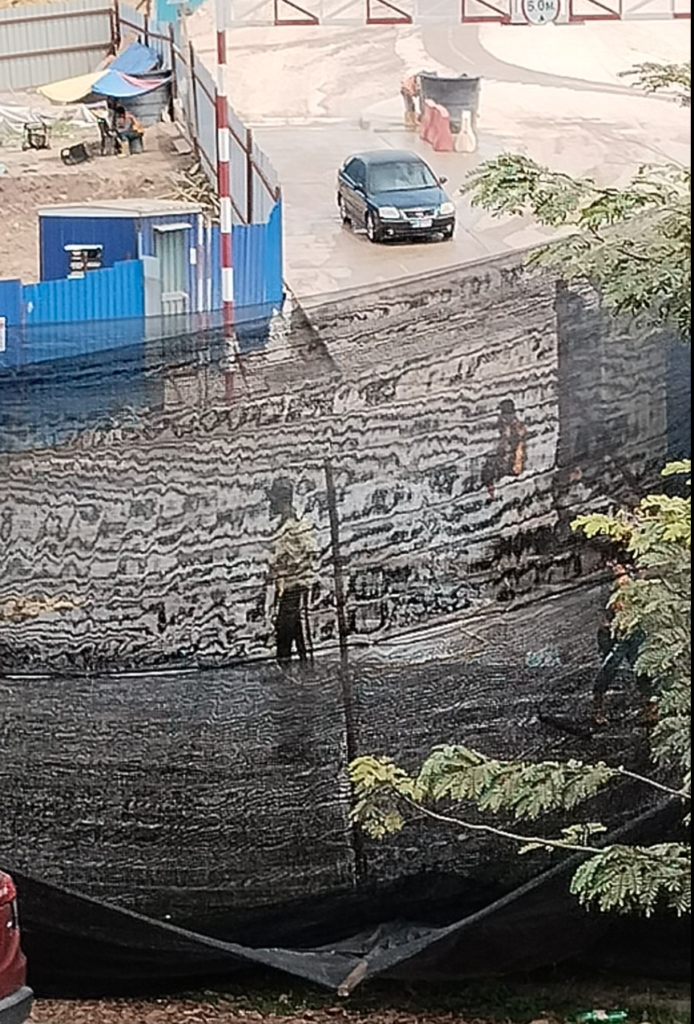
A net was put up to stop the dust.
A Greener Path: Sovereign Artificial Intelligence Spaces (SAIS)
We do not have to accept the “monolithic box” model as the only way forward. There is an alternative that prioritizes national agency and environmental harmony: Sovereign Artificial Intelligence Spaces (SAIS).
Unlike foreign-owned hyperscale centers that export data and value, SAIS is designed to be a localized, hybrid environment. By integrating these spaces within the Ecoladang Micro Farm infrastructure, we transform data processing from a resource drain into a community asset:
- Eco-Friendly Integration: Utilizing micro-farm environments allows for natural heat exchange and circular resource use, significantly reducing the “thirst” of the AI hardware.
- True Job Creation: Because SAIS is part of a functional micro-farm and local AI ecosystem, it creates diverse roles in sustainable agriculture, data management, and localized AI ethics—not just gate-watching.
- Data Sovereignty: SAIS ensures that Malaysian data remains under Malaysian jurisdiction, serving local needs rather than global corporate agendas.
The protests in Johor are a wake-up call. It’s time to stop building walls between technology and people and start building infrastructure that grows with the community.
 Previous Post