Sovereign Data Spaces: Why Edge AI is the Antidote to Cloud Overlords
TL:DR; – AI is evolving at breakneck speed in 2026 — ignoring it guarantees obsolescence, while embracing it blindly risks data leaks, vendor lock-in, and skyrocketing cloud bills. My Data Sys cuts through the noise with three sovereign, hardware-efficient paths to powerful open-source AI:
- Private CDS – fully isolated, containerised AI data centres (perfect for enterprises and Ecoladang Micro Farms).
- Personal CDS – your own plug-and-play “cloud in a box” for individuals and small teams.
- Precision CDS – ultra-low-latency edge control for critical real-time systems.
Get true data ownership, rapid deployment, and freedom from Big Tech — without gambling on scarce GPUs or unstable hyperscaler APIs. Contact us today to pick the right fit.
In an era where hyperscalers like AWS, Google Cloud, and Azure dominate AI infrastructure, sovereign data spaces are emerging as a powerful counterforce. These are decentralized ecosystems where organizations—and increasingly individuals—retain full control over their data, models, and compute, compliant with local laws and free from foreign oversight. Think of them as fortified digital territories: data stays where it’s generated, governed by national or regional regulations, enabling secure sharing without surrendering autonomy.

The “cloud overlords” problem is real. Centralized cloud AI offers immense scale for training massive models, but it comes with trade-offs: data residency risks, potential foreign legal access (e.g., under laws like the US CLOUD Act), high egress fees, latency for real-time apps, and vendor lock-in. Nations and enterprises are pushing back—over 140 countries now have data localization mandates, and initiatives like Europe’s Gaia-X or India’s sovereign AI hubs aim to build independent infrastructure.
Enter Edge AI as the antidote. By running inference (and increasingly fine-tuning) on local devices—your laptop, a mini-server under your desk, or on-prem hardware—edge AI decentralizes intelligence. No round-trip to distant data centers means:
- Ultra-low latency: Critical for real-time applications like autonomous systems or industrial monitoring.
- Privacy and sovereignty by default: Data never leaves your control, aligning perfectly with sovereign data spaces.
- Resilience: Works offline, immune to network outages or geopolitical disruptions.
- Cost efficiency: Reduces bandwidth costs and token burn for cloud APIs.
Hybrid setups are winning: train in the cloud (or sovereign regions), deploy to the edge for inference. Companies like Oracle, NVIDIA, and IBM are enabling this with distributed cloud offerings that span on-prem, edge, and sovereign zones.
PCDS as “Under-Desk Fortresses”
Personal Cloud Devices (or emerging Personal Cloud Device Spaces—PCDS) flip the script on centralized cloud dependency. Imagine a compact NAS-like box (e.g., Amber X, QNAP TS-series, or custom homelab builds) sitting quietly under your desk: your private fortress for storage, backups, media, and now AI.
These act as sovereign micro-data centers:
- Run local LLMs (via Ollama, LM Studio) for private chats, coding, or analysis.
- Host personal RAG pipelines: Index your documents, codebases, or knowledge bases locally.
- Zero-trust security: Data encrypted at rest, access controlled by you—no third-party scans.
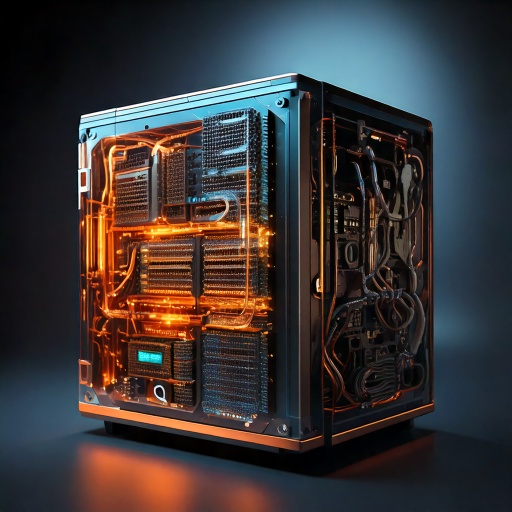
Pilots show massive savings. Local zero-trust RAG (Retrieval-Augmented Generation) setups—using vector databases like Chroma or Milvus on edge hardware—cut token costs dramatically. Instead of sending full contexts to cloud models like Claude (burning thousands of tokens per query), retrieve only relevant chunks locally, then query sparingly. Real-world reports: 40-70% reductions in API spend, with full privacy. Your “under-desk fortress” becomes a self-contained AI brain, querying cloud only for heavy lifts.
Hook: WebFrame TDM Saga vs. NVIDIA Nightmares
The contrast is stark. Centralized NVIDIA-powered cloud workflows promise god-like performance but deliver nightmares: supply chain shortages, exploding costs, export restrictions, and dependency on a single ecosystem. Tales abound of teams battling VRAM limits, queue times, or sudden price hikes.
Meanwhile, open “WebFrame” approaches—leveraging frameworks like local PyTorch, Hugging Face on consumer hardware, or edge-optimized stacks—offer liberation. Run quantized models on your RTX laptop or mini-PC: sovereign, portable, no subscriptions. The saga? Freedom from black-box overlords, building truly personal AI without the horror stories.
Edge AI isn’t killing the cloud—it’s democratizing it. Sovereign data spaces, powered by personal/edge devices, reclaim control. In 2026, your most powerful AI might not be in a hyperscale farm, but humming quietly under your desk. Ready to build your fortress? Start with a solid NAS, Ollama, and a local RAG setup—the overlords won’t know what hit them.
Here at My Data Sys, we offer three distinct deployment options designed to meet the full spectrum of data sovereignty, AI performance, and control needs in 2026—whether you’re an enterprise guarding competitive secrets, a small team wanting your own private cloud, or an operator running mission-critical real-time systems.
1. Private Compact Data Spaces (Private CDS)
Fully sovereign, containerised AI data centres typically integrated into Ecoladang Micro Farms or deployed on your premises/community site. These modular 40-foot units deliver production-grade LLM inference, secure data lakes, and advanced IT services using renewable energy and high-efficiency cooling. Ideal for organisations that require complete data isolation, regulatory compliance (GDPR, HIPAA equivalents, national sovereignty laws), and independence from hyperscaler clouds. You own the hardware, the data never leaves your control, and you gain immediate access to powerful open-source AI without the complexity of fine-tuning or training.
2. Personal Cloud Device Spaces (Personal CDS)
Your own plug-and-play “cloud in a box” — a compact, Apple Silicon-powered (or equivalent high-efficiency) device that lives in your home, office, or small lab. By default, it stays securely connected to our curated update stream from PCDS hubs in Ecoladang Micro Farms, automatically receiving the latest open-source models, security patches, and feature enhancements without compromising privacy. Alternatively, it can operate 100% air-gapped as a standalone ultra-secure system for the most sensitive use cases. Perfect for individuals, researchers, startups, or small teams who want the power of a personal AI agent stack (RAG, memory, tools, multi-modal) while keeping every byte of data firmly under their control.
3. Precision Control Device Spaces (Precision CDS)
Edge-optimised deployments built around our patented and trademarked Neural MicroServices architecture. These systems deliver deterministic, ultra-low-latency AI inference for critical real-time control loops using lightweight protocols like Zigbee, MQTT, and LoRaWAN. Designed for robotics, industrial automation, precision agriculture (e.g., Ecoladang sensor networks), environmental monitoring, and any environment where milliseconds matter and reliability is non-negotiable. Neural MicroServices allow granular deployment of tiny specialised models directly on sensors and actuators, with central orchestration when needed — all while maintaining end-to-end encryption and zero dependency on internet connectivity for core functions.
Whichever path you choose — Private, Personal, or Precision — you get the same commitment: true data ownership, transparent open-source AI, dramatically lower energy footprint, and freedom from vendor lock-in.
Contact us today at mydatasys.com or reply here to discuss which option best fits your goals. We’re ready to walk you through proof-of-concept deployments and realistic 2026 hardware roadmaps.
 Previous Post
 Next Post