Why the Massive Race for AI Data Centers?
The race to build massive AI data centers continues to accelerate globally, driven by the insatiable compute demands of large language models (LLMs) and frontier AI systems. These models, at their core, are advanced next-token predictors—statistical engines trained on vast datasets to generate coherent, context-aware outputs. While scaling has unlocked remarkable emergent capabilities (from fluent writing to multi-step reasoning), they remain tools of pattern matching, not sentient entities with true understanding or agency.
The Transformer architecture, introduced by Google in 2017 and widely open-sourced, enabled efficient parallel training on massive GPU clusters, sparking the current boom. Progress follows scaling laws: more parameters, data, and compute yield better performance, though with diminishing returns and escalating costs. Companies race to control this infrastructure because leading models dominate markets in productivity, automation, and innovation.
Yet, the infrastructure demands are immense and increasingly problematic, especially in emerging hubs like Malaysia, where ambitious government approvals have fueled rapid growth but exposed serious short-term vulnerabilities.
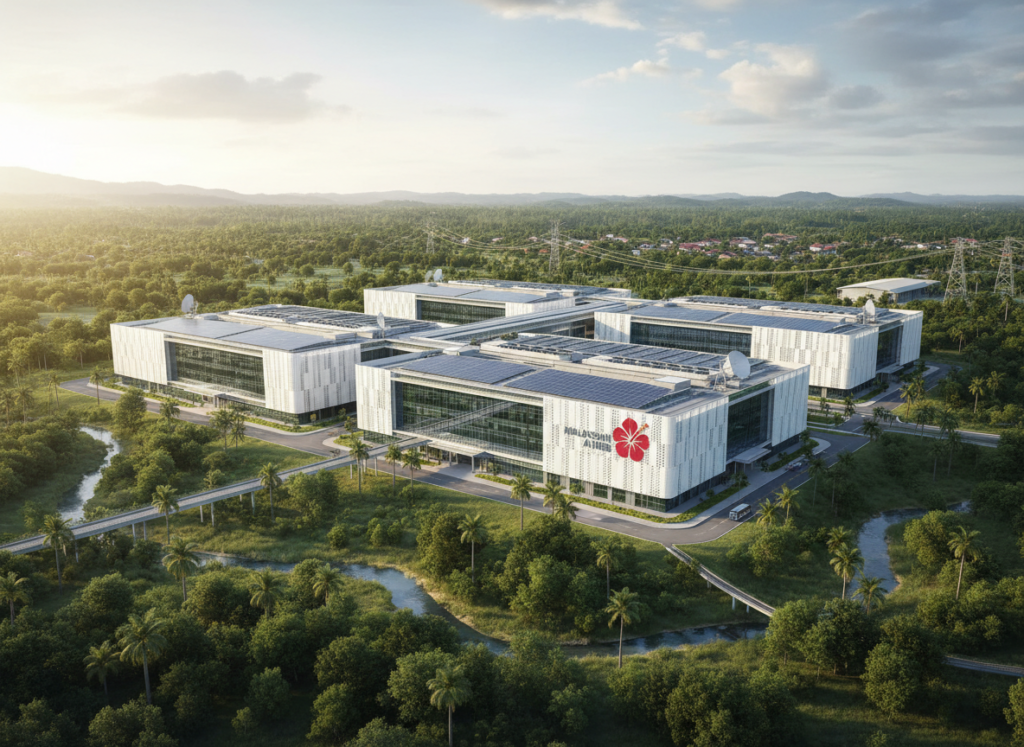
Malaysia’s Data Center Surge and Its Hidden Costs
Malaysia has positioned itself as Southeast Asia’s rising digital capital, attracting billions in investments from hyperscalers like Microsoft, Google, ByteDance, and others. From 2021 to mid-2025, authorities approved over 140 projects worth nearly RM144 billion (around USD 34 billion), with Johor emerging as the epicenter—home to dozens of operational, under-construction, and approved facilities. The government has promoted this as a path to economic growth, high-value jobs, and a stronger digital economy.
However, short-term decisions to green-light projects based on speculative intent—often “letters of intent” or early queries treated as firm commitments—have outpaced infrastructure readiness. Many approvals were granted amid hype around AI potential, but actual utilization has lagged: data centers in Peninsular Malaysia have operated at less than half their declared maximum demand in some cases. This “phantom demand” clogs grid planning, reserves capacity that may never materialize, and delays real projects.

The core bottlenecks aren’t just total power generation but delivery infrastructure:
- Grid Strain and Transformers: AI data centers consume up to 10x more electricity than traditional facilities, demanding constant, high-voltage supply. Malaysia’s grid, heavily reliant on coal and gas, faces upgrades for ultra-high voltage connections. Step-down transformers—at substations and sites—are critical for safe delivery over distances, yet global shortages (exacerbated since the 2020s AI boom) lead to multi-year wait times and cost spikes (up to 70% in some markets). In Malaysia, speculative reservations amplify this, creating artificial congestion and risking stranded assets if projects falter.
- Water Usage: Cooling these always-on facilities is water-intensive, especially in tropical climates. A 100 MW center can consume millions of liters daily—equivalent to a small city’s needs. In Johor and Selangor, shortages have forced authorities to tighten approvals: deferring water connections until 2027 for some, halting Tier 1/Tier 2 (water-heavy) projects, and prioritizing sustainable Tier III/IV designs using alternatives like reclaimed water or air cooling. Demand in key areas far exceeds current supply, raising questions of priority: AI infrastructure or public needs?
- Environmental and Land Impacts: Rapid land conversion (e.g., from palm oil estates) adds pressure, while emissions rise on a fossil-fuel grid. Projections show data center power demand could reach 30% of national totals by 2030, potentially locking Malaysia into carbon-intensive paths despite net-zero goals.
The Myth of Mass Job Creation
Proponents highlight job opportunities, but hyperscale AI data centers are largely “dark sites”—highly automated facilities with minimal on-site staffing. Once built, they run with remote monitoring, requiring few technicians for maintenance compared to traditional industries. Construction brings temporary jobs, but long-term employment is limited to specialized roles (e.g., engineers, security). The promise of widespread local hiring often falls short, as operations prioritize efficiency over labor intensity.

A Smarter Path: Private Compact Sovereign Data Centers
Amid these challenges, a more balanced approach is emerging: smaller-scale, private compact sovereign data centers that prioritize control, sustainability, and local benefits over mega-scale foreign hyperscaler campuses.
Initiatives like those from mydatasys.com advocate for Private Compact Data Spaces (PCDS)—secure, efficient, renewable-powered environments tailored for AI inference and enterprise needs. These modular, prefabricated setups (often using open-source Linux systems) reduce grid strain through lower power footprints, on-site or localized energy (e.g., renewables and storage), and minimal water use via advanced cooling. They empower Malaysian businesses and government with sovereign control—keeping data and compute within national borders—while creating higher-value, skilled jobs in setup, management, and innovation.
By focusing on compact, sovereign solutions, Malaysia can capture AI’s benefits without the outsized environmental and infrastructural risks of unchecked hyperscale expansion. Short-term speculative approvals have highlighted the perils of rushing ahead; a measured shift toward sustainable, locally oriented infrastructure could turn the boom into genuine, equitable progress. The future of AI in Malaysia—and globally—depends on balancing ambition with responsibility.
Recent developments in early 2026 reinforce the article’s warnings:
- Malaysia has tightened regulations to curb “phantom demand” — data centers must now hit 85% utilization of declared power in the first four years or face penalties (RM8.50 per kW shortfall monthly), with requirements for concrete evidence like offtake agreements to prevent speculative hoarding that clogs approvals and infrastructure planning.
- Water and power strains continue in hubs like Johor and Selangor, with authorities deferring approvals and pushing for sustainable cooling (e.g., reclaimed water, air systems in Tier III/IV designs) amid tropical climate challenges that amplify cooling needs.
- Broader forecasts show AI-driven demand potentially pushing data centers toward 30%+ of national power by 2030 on a still coal/gas-heavy grid, heightening risks of higher costs, carbon lock-in, and resource competition.
 Previous Post